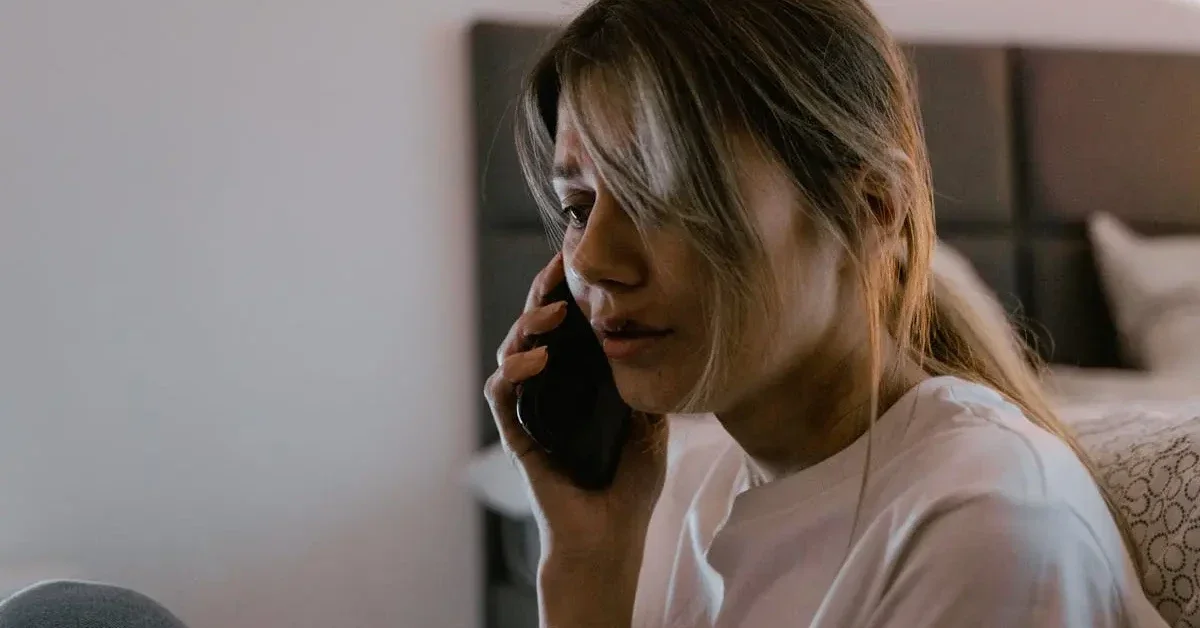
You are not required to speak to a bill collector on the phone
A Canadian has no legal obligation to speak to a bill collector, regardless of who employs the collector.
If you receive a collection call from a bill collector employed by any one of the following entities:
- Your original creditor
- A collection agency
- A law firm
- A debt buyer (a firm that currently owns your unpaid account)
You have every right to hang up the phone on them.
Responding to a written communication from a bill collector
In some instances, you might receive a written communication from a bill collector.
This written communication might be one of the following:
- Written payment demand (email, regular mail, or courier)
- Document commencing a lawsuit against you
You are under no legal obligation to respond to a written payment demand from a bill collector.
If your creditor, or its legal representative, serves you with a written document commencing a lawsuit against you, there are legal consequences if you ignore it.
If you do not file the appropriate defence to a lawsuit in time, your creditor will likely obtain a default judgment against you. Once a creditor has a judgment against you, it has powerful tools to recover money from you.
The difference between stopping and avoiding collection calls
There's a difference between avoiding collection calls and stopping them. In certain circumstances, a Canadian consumer can send what's known as a "cease and desist" letter to a bill collector. Once the bill collector receives it, they can't make any further telephone calls to the consumer.
Some, but not all, provinces and territories have a licensing statute for collection agencies that gives residents the right to send a cease and desist letter to a collection agency.
As a practical matter, unless a bill collector is making collection calls to you at your workplace, it often makes more sense to use tactics for avoiding collection calls instead of sending a cease and desist letter.
One disadvantage of a cease and desist letter is that it only works against the specific collection agency it's sent to.
An example will help illustrate this point.
An Alberta resident, Sarah Chen, is receiving collection calls about an unpaid Bell Canada cell phone bill. Under the Alberta Consumer Protection Act, Ms. Chen sends a cease and desist letter to the collection agency that's calling her. Once the collection agency receives the letter, it must stop calling Ms. Chen. One month later, Bell Canada recalls the account from this collection agency and reassigns it to a different one. If Ms. Chen wants to stop calls from the second collection agency, she has to send a cease and desist letter to that agency too.
Another disadvantage of a cease and desist letter is that it might not be available. In many instances, a cease and desist letter isn't an option if you're receiving calls from collectors employed by your original creditor, a debt buyer, or a law firm.
Avoiding collection calls: an overview
If you use a cease and desist letter to stop collection calls, it's illegal for the collection agency to call you after it receives the letter. If you use tactics to avoid collection calls, your goal is to prevent a collector from legally making a demand for payment.
One advantage of using avoidance tactics is that they work in any scenario. A cease and desist letter might not be legally available to you, depending on your creditor, where you live, and where the collection calls originate.
Hanging up the phone on a bill collector
The simplest, and often the most effective, tactic for avoiding a collection call is to hang up the phone on a bill collector at the moment of your choosing.
You are within your rights to hang up as soon as you realize a bill collector has you on the phone. This tactic works on any bill collector, regardless of their employer.
Declining to identify yourself to a bill collector
Anyone making a collection call, and their employer, can get into serious trouble if they disclose personal information about an unpaid account to anyone other than the person legally responsible for the debt. That personal information includes the debtor's name, the name of the creditor, and details about the outstanding account.
Disclosures of this kind can violate privacy laws in Canada. Alberta, British Columbia, and Quebec all have their own private-sector privacy laws.
- Alberta has the Personal Information Protection Act (PIPA).
- British Columbia has its own Personal Information Protection Act.
- Quebec has the Act respecting the protection of personal information in the private sector.
The relevant federal law, the Personal Information Protection and Electronic Documents Act (PIPEDA), protects Canadians outside of Alberta, British Columbia, and Quebec.
Individuals making collection calls are trained to confirm that the person they're speaking to is the person legally responsible for the debt before the collector starts the collection call and makes a payment demand.
When a collector calls you, they can't assume they've reached the person legally responsible for the debt.
Firstly, when a phone number is disconnected, it's recycled and given to a new consumer. The phone number you were given at some point in the past might have once belonged to someone who owed money to several creditors. Secondly, when a collector calls your phone number, they can't assume it's you answering the phone.
Each province and territory across Canada has a law regulating the conduct of collectors employed by collection agencies. Some, but not all, of these laws require a collector to confirm they're speaking with the person legally responsible for the debt before starting the collection call.
If a collector from a collection agency calls you and starts making payment demands before confirming your identity, the collector might have violated provincial law regulating bill collectors.
The protections in Canadian privacy laws and some provincial collection agency licensing legislation give you an opportunity to avoid a collection call. You might be able to legally avoid a collection call, specifically a demand for payment, by simply declining to confirm your name when asked by a collector.
An example will help illustrate this point.
A collection agency is trying to collect an unpaid credit card belonging to Dan Parker, an Ontario resident. Jordan Miller, a collector from ABC Collection Agency, is making his first call to Dan Parker to collect the unpaid credit card account.
Dan: Hello
Jordan: Dan Parker?
Dan: May I ask who is calling?
Jordan: My name is Jordan Miller. I am calling about an important legal matter.
Dan: What is the name of your employer?
Mr. Parker has not confirmed his identity to the collector, and so the collector can't legally start the collection call and make a demand for payment. You'll notice the collector didn't give the name of his employer either. Doing so would disclose the existence of a debt, which is illegal unless the disclosure is made to the person who owes the unpaid account. The collector has to first confirm they're speaking to the person who owes the money before making a payment demand.
Using technology to avoid collection calls
A number of technology-based tactics can help you avoid collection calls.
If you have a call display feature on your phone, you can choose to only answer calls from phone numbers you recognize.
If you own an Apple iPhone running iOS 26 or later, you can use the Call Screening feature. Go into Settings, tap Apps, find the Phone app, and scroll to "Screen Unknown Callers." You can tap "Ask Reason for Calling" to have unknown callers ask for their name and reason before the call rings through. The response is transcribed and displayed on your phone, and you can choose to answer, reply with a text, or let the call go to voicemail.
Source: Apple Support – How to use Call Screening on iPhone
One disadvantage of Call Screening is that you might miss an important call from someone whose name isn't in your contact list. Your auto shop repairing your vehicle might hang up after encountering it.
It may also be possible to install an app on your phone from the Google Play Store that provides a similar Call Screening feature.
